“Operational MDM requires higher availability, scalability and resilience – and Informatica supports all of that. We spend less time on underlying complexities and more time ensuring data accuracy and powering AI use cases.”
Empowering customers to achieve success





Use Informatica Headless and CLAIRE® AI at no additional cost
MDM capabilities built for the age of AI
Headless MDM
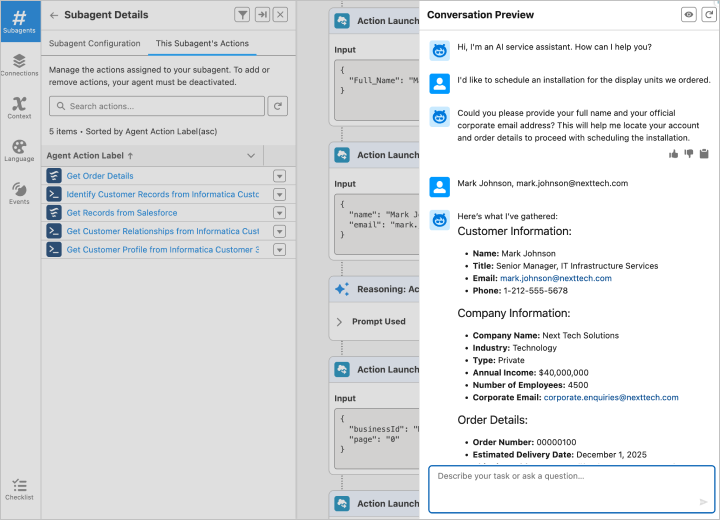
The golden record — and the work of stewarding and governing it — can happen anywhere, via APIs and MCP servers including Salesforce, Slack, Databricks, Claude, and any other app, agent, or workflow, right where everyone works.
AI-driven match and merge
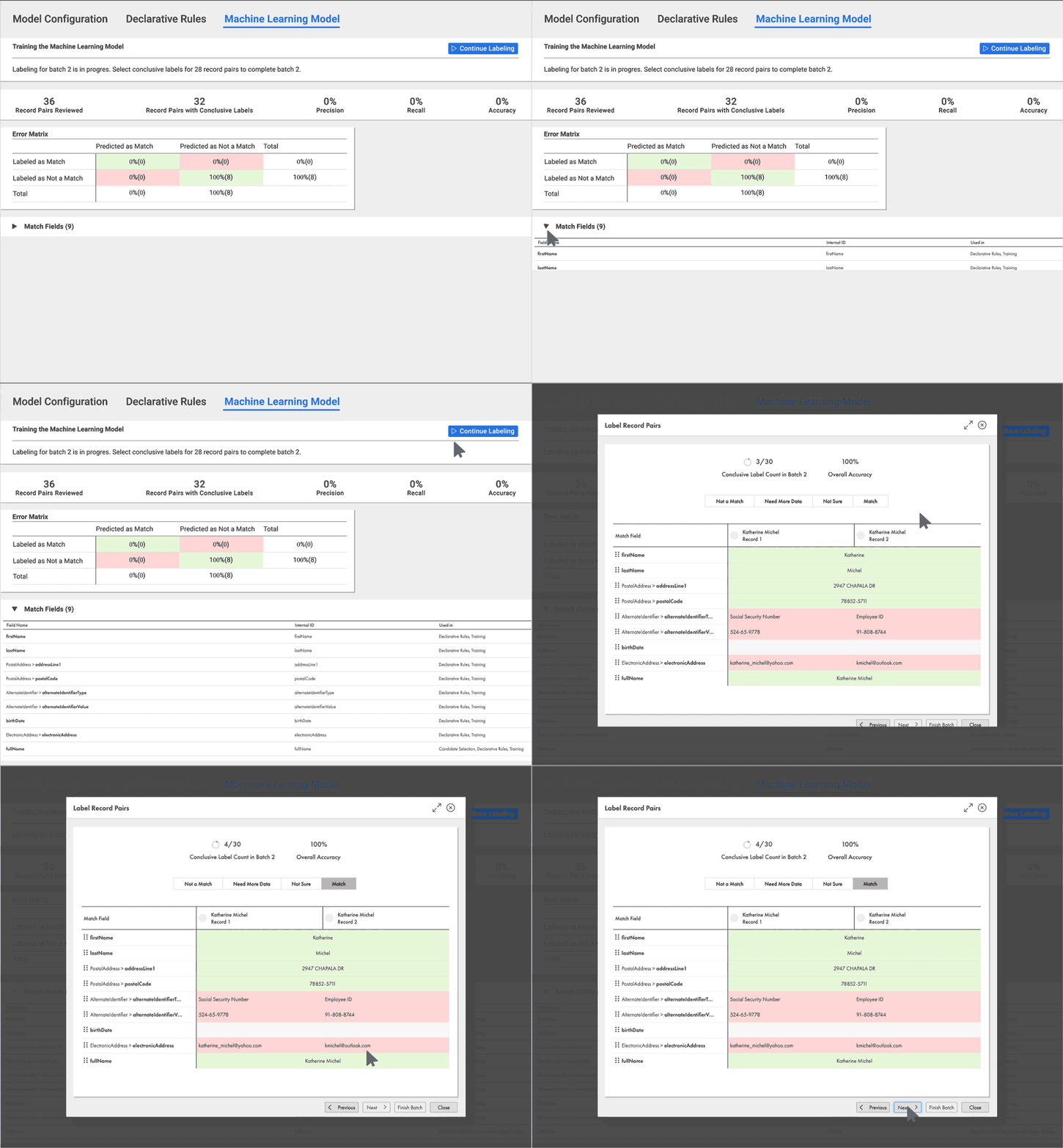
Self-tuning AI resolves millions of fragmented records with rule recommendations and full explainability built in. High accuracy, no black box, full confidence.
Agentic data stewardship
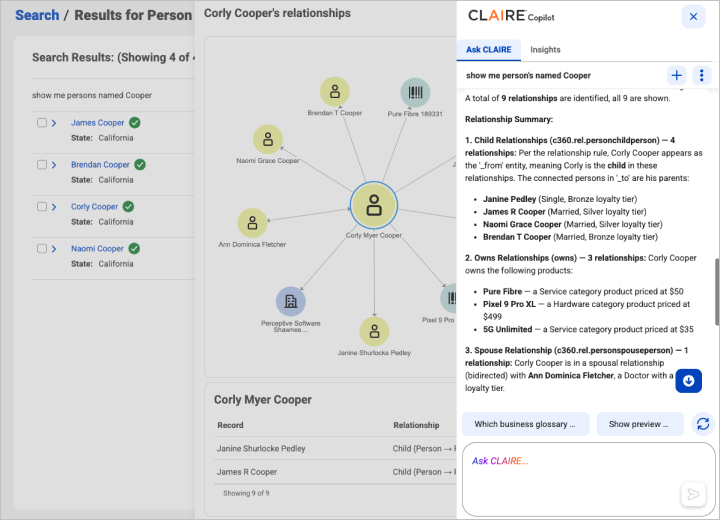
AI agents handle matching, flagging and enrichment automatically — so your team focuses on decisions, not data wrangling. Less manual work, faster stewardship, better data quality.
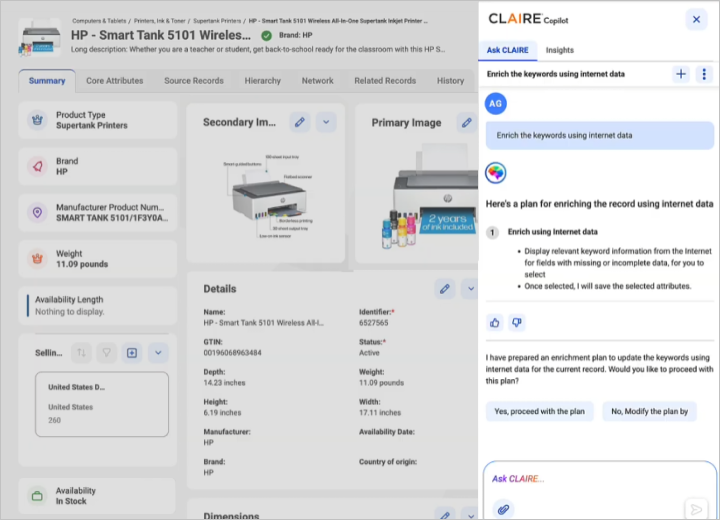
Agentic PIM
The PXM agent automatically classifies products and enriches content at scale — so your teams publish accurate, compelling product experiences faster, without the manual effort.
Explore MDM and 360 Applications
360 Applications are domain-specific solutions built on MDM, giving your business a pre-configured, trusted view of customers, products, suppliers and more, without starting from scratch.
Your essential resources for MDM and 360 Applications

2026 Gartner® Magic Quadrant™ for MDM Solutions

E-BOOK
Close the Context Gap Before Your AI Investments Miss the Mark

Digital Business Requires Intelligent Master Data Management
FAQ about MDM and 360 Applications
MDM is the process of creating and maintaining a single, trusted record for customers, products, suppliers and more across your business. It serves as the governed foundation for accurate reporting, AI agents, and informed decision-making — eliminating redundancy and ensuring every team works from the same truth.
Customer 360 is a shared, single view of your customer across an organization. It includes not only who the customer is but also their relationships, activities and inferred attributes.
PIM is the centralized management of product information and digital assets to enhance the product experience and enable effective sales across multiple channels. It serves as a master-data driven platform for collecting, enriching and distributing product information to various business functions.
SRM is a structured approach to effectively managing all supplier relationships. A good strategy for SRM helps you maximize the business value of your supplier interactions. Relationships can be well maintained with the aid of vendor data (e.g. contact information, products and services), lifecycle management, workflows (e.g. onboarding), hierarchies, risk, performance and compliance.
Reference Data Management (RDM) involves organizing and maintaining consistent, standardized reference data across an organization to ensure accuracy and coherence in various systems and processes.
When selecting a master data management (MDM) tool, prioritize seamless data integration across your existing tech stack, robust data governance (including automated deduplication and cleansing) and cloud-native scalability. Look for solutions that offer flexible data modeling, an intuitive interface for business stewards, and strict security and compliance controls (such as audit trails and role-based access). Ultimately, the ideal MDM tool should establish a reliable, real-time "single source of truth" that easily adapts as your enterprise grows.
Headless MDM decouples master data capabilities from the UI, making them available as APIs and MCPs — so any app, agent, or workflow can access governed golden records without integration work.
Agentic MDM is master data management enhanced with AI agents that autonomously match, clean, enrich, and govern data across systems in real time. Instead of relying only on rules and manual review, it uses agentic AI to continuously resolve data quality issues and keep a trusted, unified record ready for use by people and other AI agents.