
“The vision I describe to my colleagues is that they’ll be able to implicitly trust the data that informs them, no matter where in our organization it comes from – that goes for our cloud data stored on Microsoft Azure.”





Use CLAIRE Generative AI and Informatica Headless to automate and scale data quality across any application
Automate data quality and observability at enterprise scale
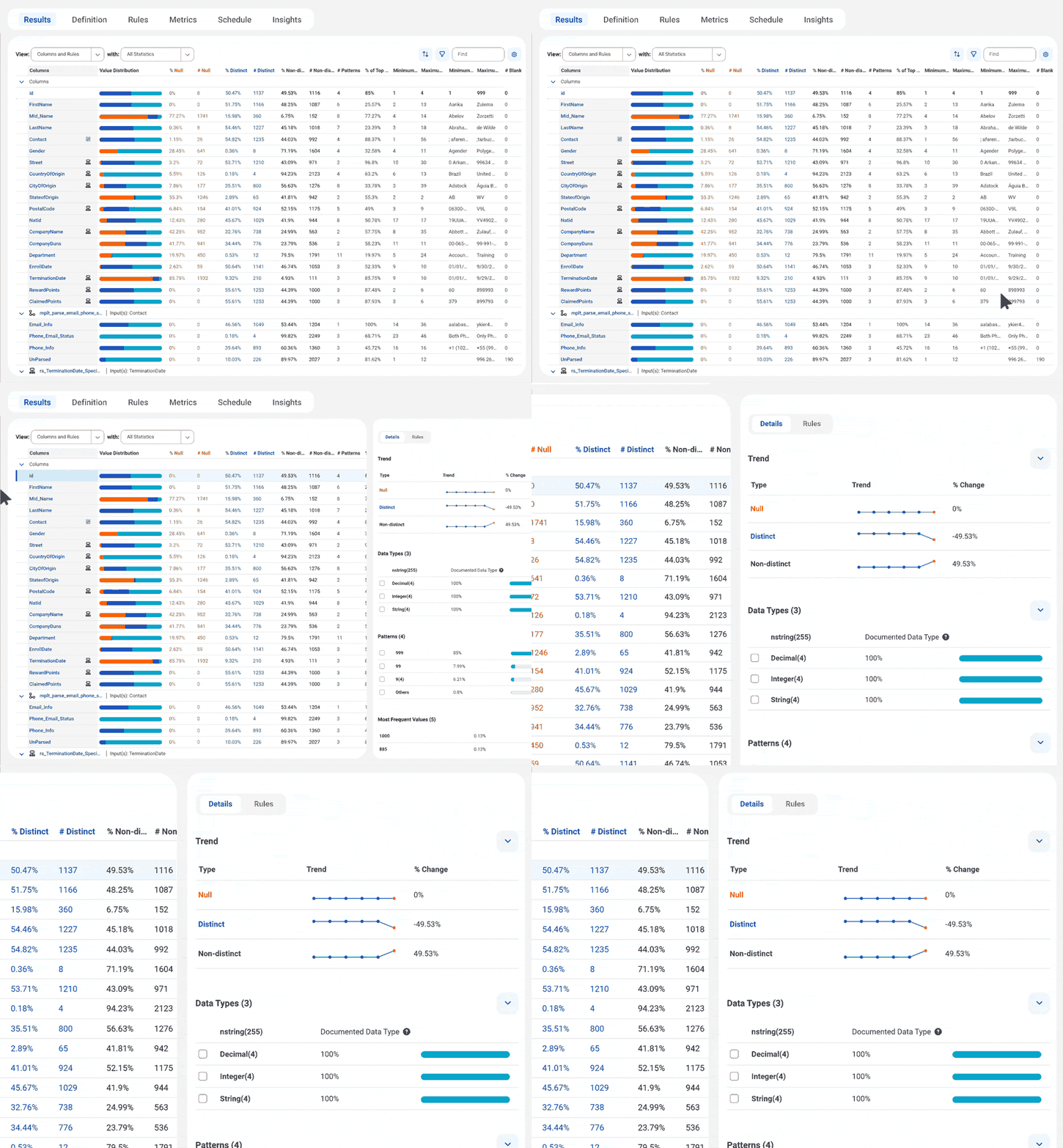
Automate and scale data profiling
Continuously profile data to uncover patterns, anomalies and quality risks.
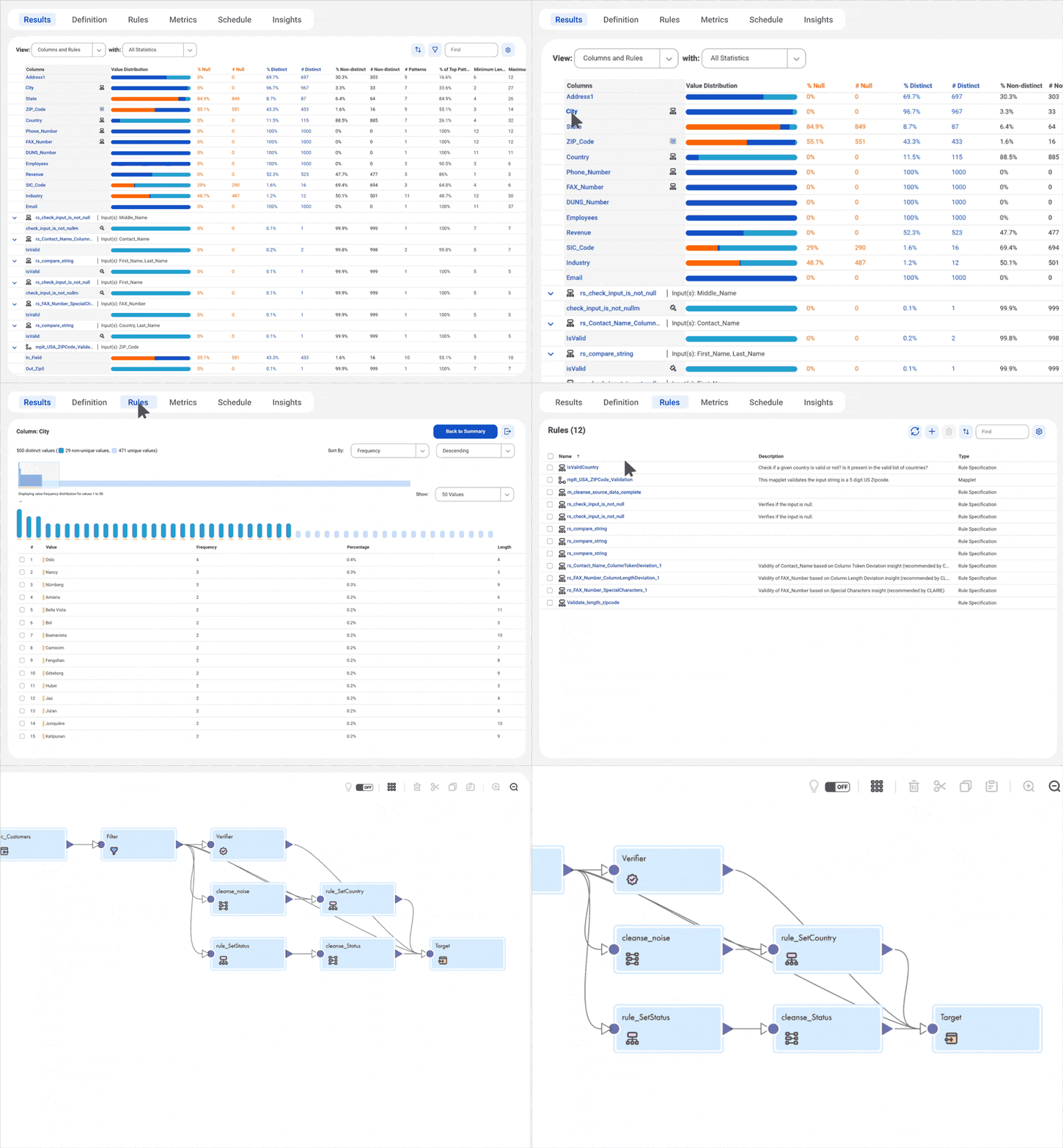
Scale data quality with AI agents
Deploy Data Quality Agents to automate cleansing, standardization, and validation across enterprise data, reducing manual effort while improving accuracy and reliability at scale.
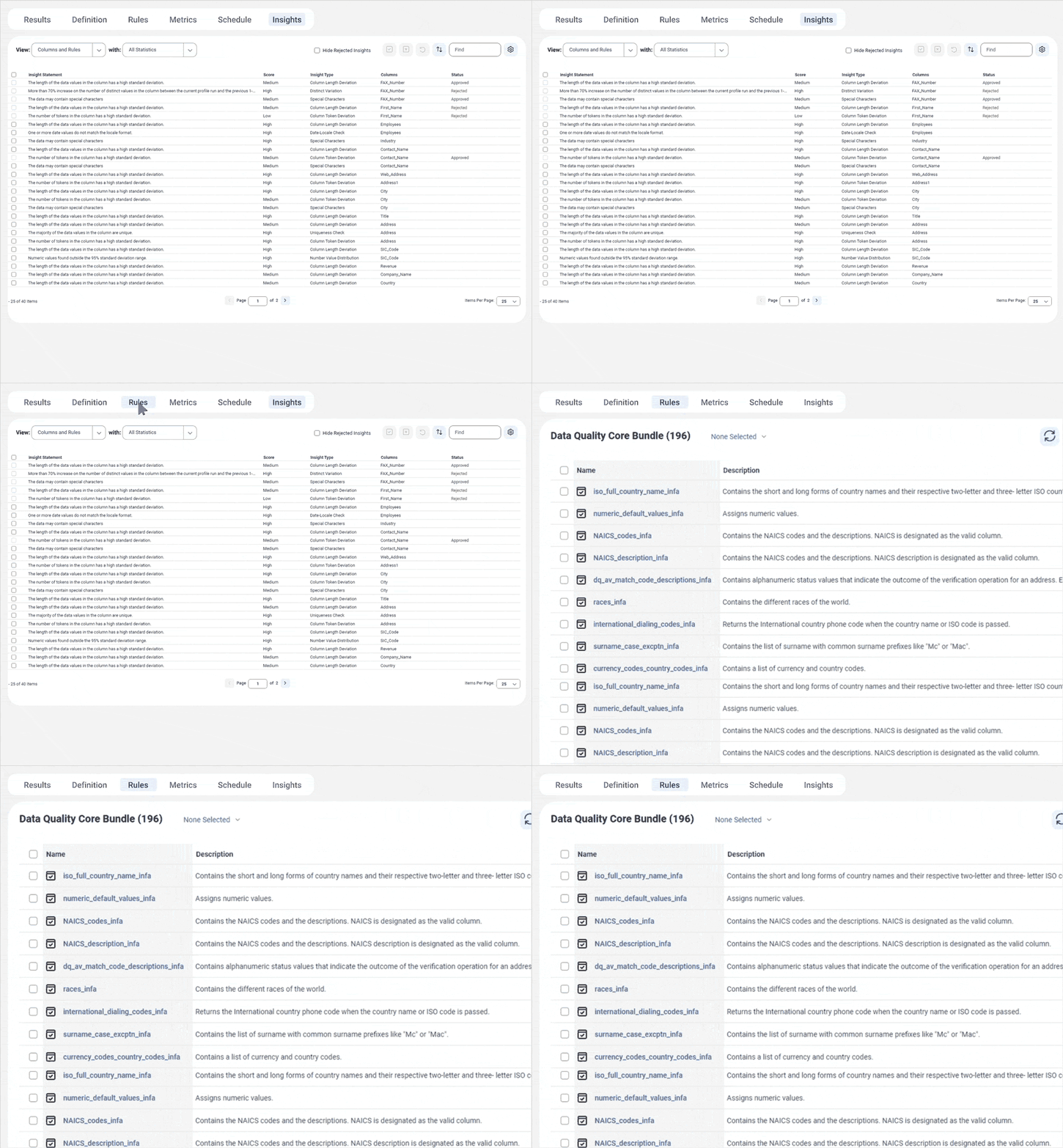
Use AI-powered rules and accelerators
Autogenerate common data quality rules across virtually any data from practically any source.
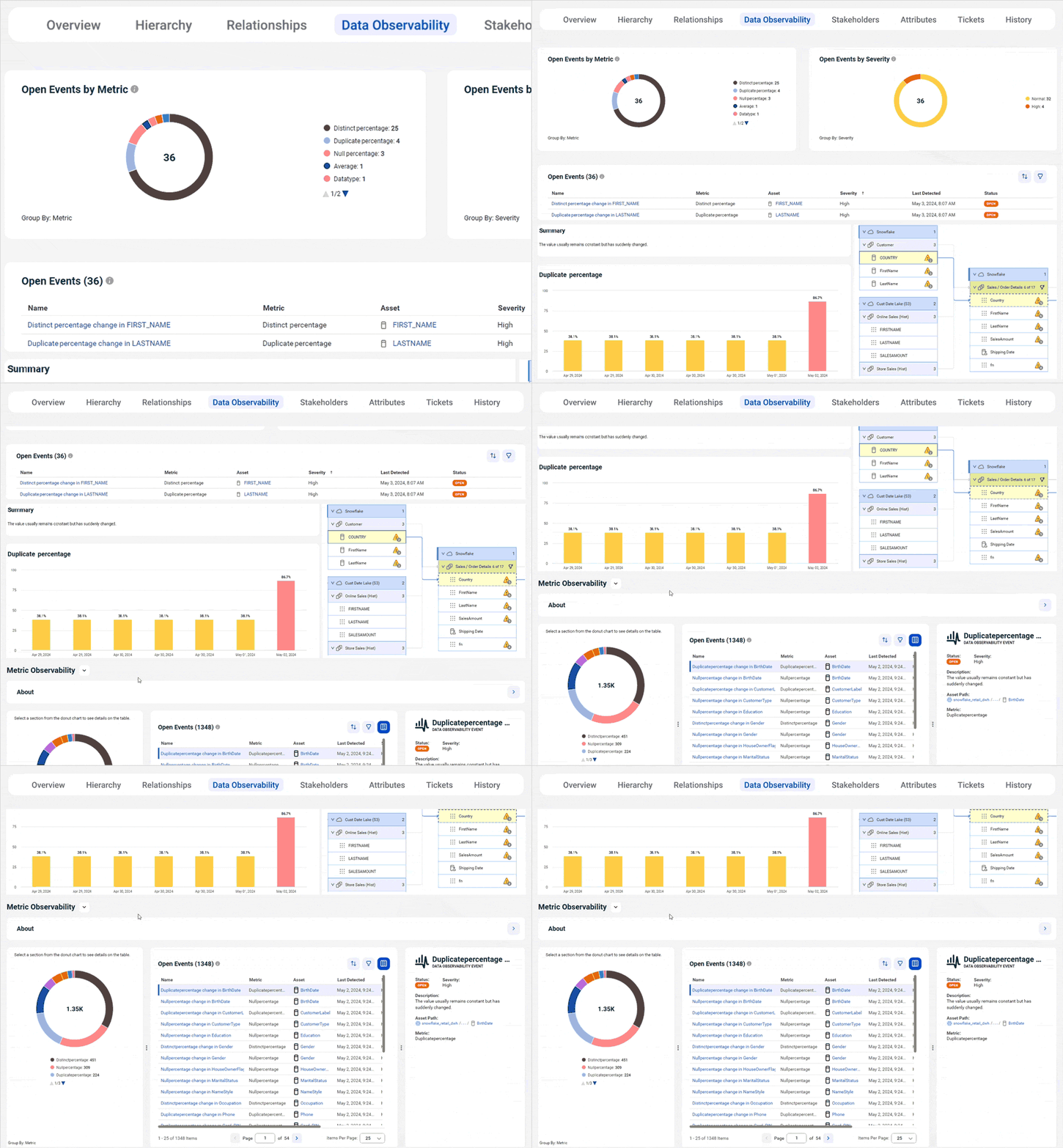
Boost data observability for better insights
Understand the health of your data through the multiple lenses of data, pipelines and business.
Pay only for what you use with our flexible pricing.
Explore related Data Quality and Observability services
As a leading part of the AI-powered Informatica Intelligent Data Management Cloud (IDMC), Data Quality and Observability works with a range of complementary services.
Key Data Quality and Observability resources
EBOOK
Scale AI with Data You Can Trust


BLOG
AI Won't Wait: 5 Data Quality Decisions for CDOs

2025 Gartner® Magic Quadrant™ for Augmented Data Quality Solutions
FAQ for Data Quality and Observability
Data quality refers to how fit data is for its intended purpose. It is measured across dimensions such as accuracy, completeness, consistency, timeliness, validity and uniqueness. High-quality data enables trusted analytics, operational efficiency and reliable AI outcomes, while poor-quality data can lead to inaccurate insights and flawed decisions.
Data observability is the practice of continuously monitoring, diagnosing and managing the health of end-to-end data pipelines by tracking key metrics like freshness, volume, distribution, schema changes and lineage. Data observability provides the automated telemetry, real-time anomaly detection and root-cause analysis required to continuously measure, protect and maintain data quality at scale.
Data quality is essential for trusted business and AI outcomes. Poor-quality data can skew analytics, slow operations, increase costs and undermine confidence in AI-generated insights. As organizations expand their use of AI and automation, maintaining high-quality data is critical for making faster decisions, improving customer experiences and reducing risk.
Common data quality issues include:
- Accuracy – data does not reflect real-world values
- Completeness – missing records, attributes, or values
- Consistency – conflicting information across systems
- Duplication – multiple records representing the same entity
- Validity – data that violates defined formats, rules or standards
- Lack of uniqueness – inability to reliably distinguish records
- Timeliness issues – outdated or stale data that no longer reflects current conditions
These issues often arise during system integrations, cloud migrations and application modernization initiatives. Left unresolved, they can degrade analytics, operational processes and AI performance.
Improving data quality delivers measurable business value, including:
- Better AI and analytics outcomes – trusted data leads to more reliable insights and predictions
- Faster decision-making – teams can act confidently on accurate information
- Increased productivity – less time spent finding, fixing and reconciling data issues
- Lower operational costs – reduced rework and fewer downstream errors
- Stronger customer experiences – accurate, current data enables personalization and service excellence
As AI adoption grows, data quality has become a foundational requirement for scalable, trustworthy AI initiatives.
AI is only as good as the data behind it. Incomplete, inconsistent, outdated or duplicated data leads to biased outputs, poor recommendations and inaccurate predictions — eroding trust in the very systems organizations are investing in. By continuously improving data quality, enterprises can build AI applications that perform reliably at scale and give business leaders the confidence to act on what AI tells them.