
“It’s impossible to overstate the value of getting your data right. With Informatica, our teams make well-informed decisions the first time around, which means better results for consumers, faster.”




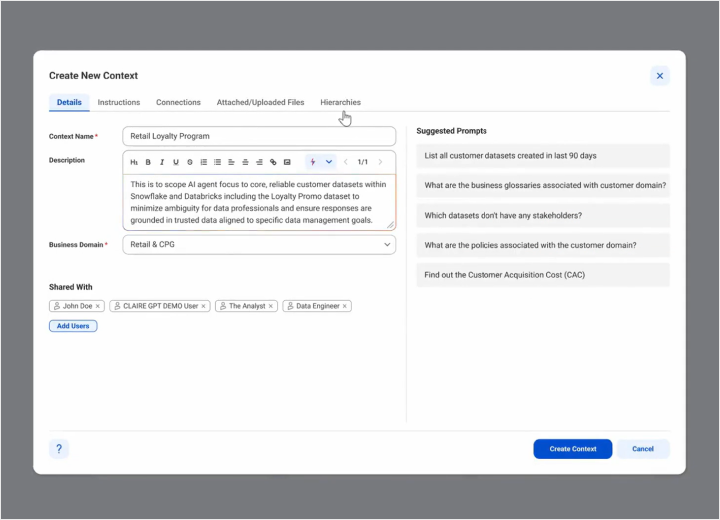
Fuel Agentic operations with an AI-powered catalog of catalogs
Ground AI and agents in a trusted enterprise context layer
Build a unified machine-readable metadata foundation that serves as a context map for humans, AI, and agents.
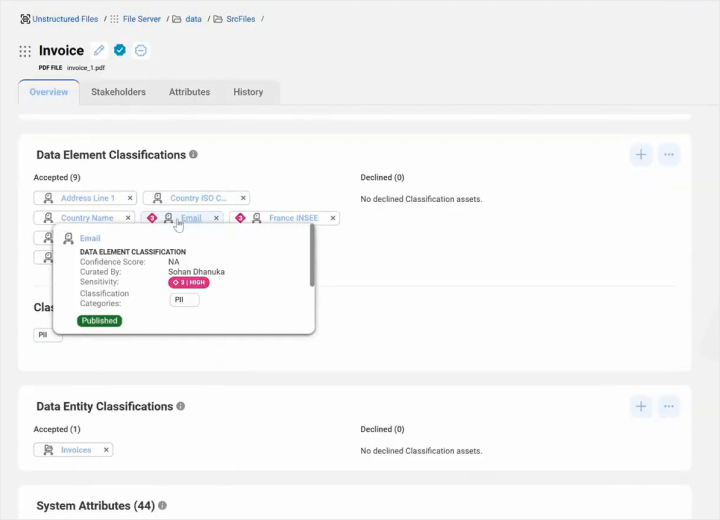
Inventory unstructured, semi-structured, and structured data
Enhance context for AI agents by cataloging and classifying previously unusable unstructured files at enterprise scale, along with structured and semi-structured data sources
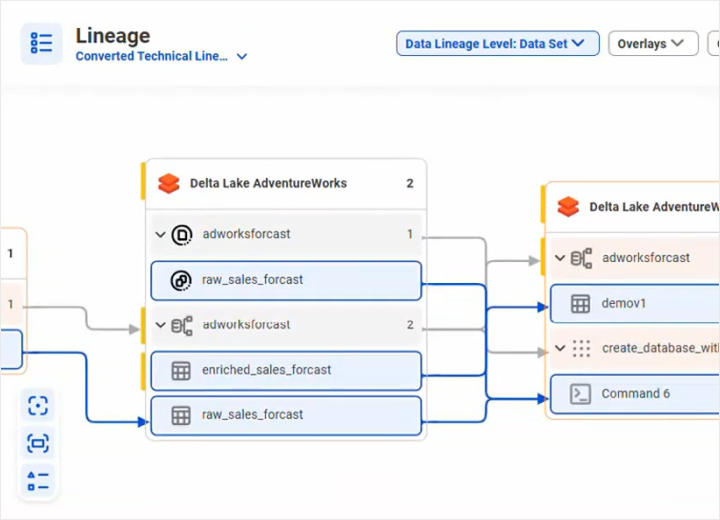
Visualize data lineage and relationships across AI assets
Explore data flows, asset relationships and analyze impact with automated and inferred end-to-end data lineage.
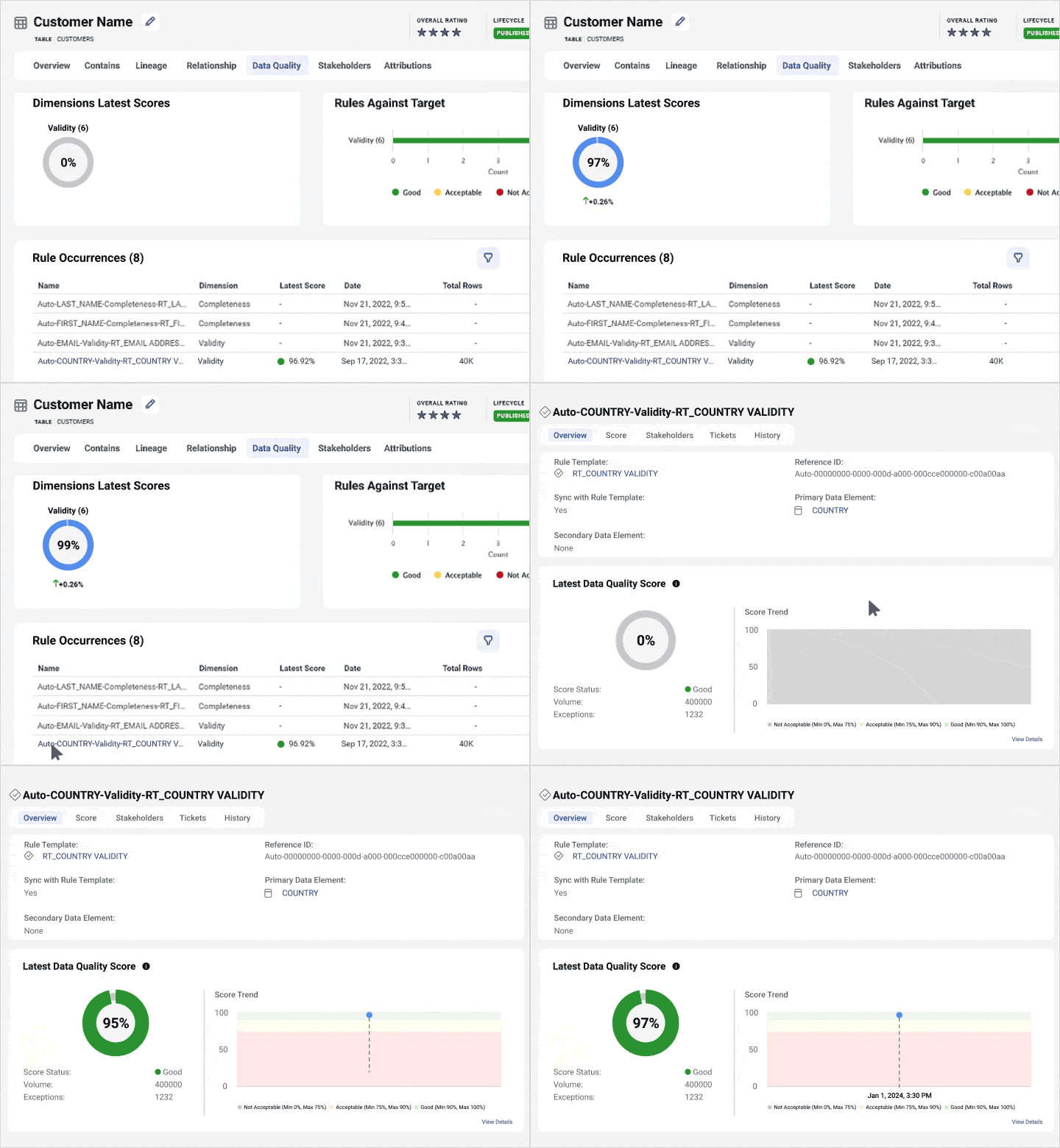
Assess and monitor data quality
Automatically profile data, apply rules, identify issues, and measure data quality via metrics and scorecards.
Scale data and AI stewardship with agentic capabilities
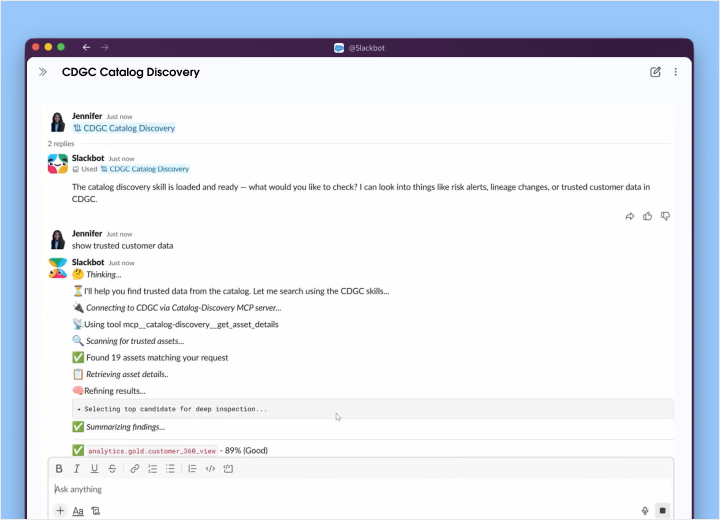
Automate discovery, enrichment, and data quality management with CLAIRE and purpose-built Skills.
Get consumption-based pricing
Pay only for what you use with our flexible pricing.
Explore related Cloud Data Catalog services
As a leading part of the AI-powered Informatica Intelligent Data Management Cloud (IDMC), Data Catalog works with a range of complementary services.
Key Data Catalog resources
WEBINAR
Meet the Experts: What’s New in Cloud Data Governance & Catalog (CDGC)

2025 Gartner® Magic Quadrant™ for Metadata Management Solutions CTA: DOWNLOAD NOW

VIDEO
Deliver Data Intelligence with Cloud Data Governance and Catalog

FAQ for Data Catalogs
A data catalog is a centralized inventory of data that includes information that describes the data (metadata) and helps organizations efficiently find and understand these assets. Data catalogs offer modern enterprises a way to harness the power of data for analytics and AI initiatives by curating it to raise data quality, classifying it for relevancy, and overall building its trustworthiness.
Metadata management is the ongoing discipline of organizing, governing and maintaining information about your data, such as its lineage, ownership, definition and structure, to ensure data assets across your organization remain accurate, secure and usable. A data catalog acts as the central engine for this process by automatically scanning, indexing and organizing that metadata into a searchable, user-friendly inventory; it allows teams to easily discover reliable datasets, track data lineage, enforce compliance and eliminate data silos through a single, centralized portal.
A machine learning data catalog utilizes advanced algorithms and techniques to automate capabilities including data discovery, metadata extraction, data inventory, data classification, data curation and data lineage.
A data dictionary provides technical documentation, specification and description of data structures in a database including data attributes, fields, data type, length, valid values, default values etc. Whereas, a data catalog serves as a centralized repository of all data assets across the organization with search and management tools that enable data discovery, promote collaboration and support data governance.
A data catalog allows organizations to connect to data sources, classify data types and inventory them; whereas a data marketplace provides the next step by packaging up these data sets into data products for end users to request, review and use for business initiatives by accessing them using a business-friendly portal.