
“We take privacy and security very seriously. Every data analysis, report and solution we develop needs to be validated for GDPR compliance by our legal and security teams. With Informatica, we’ve gained the visibility and control over our data to meet the regulatory requirements.”



The Gartner® Magic Quadrant™ for Data & Analytics Governance Platforms marks its first-ever release.
Operationalize trust, transparency and compliance across the Agentic Enterprise
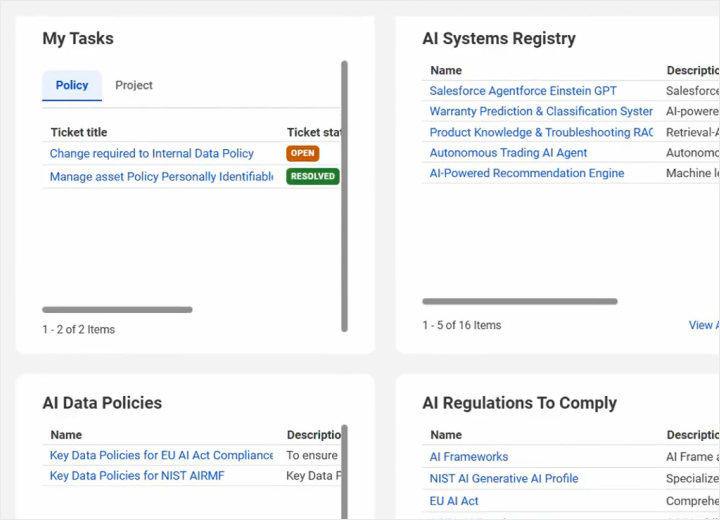
End-to-end data and AI governance
Support unified, comprehensive governance for data and AI assets. Deploy AI guardrails, compliance policies, and risk assessments directly into the lifecycle.
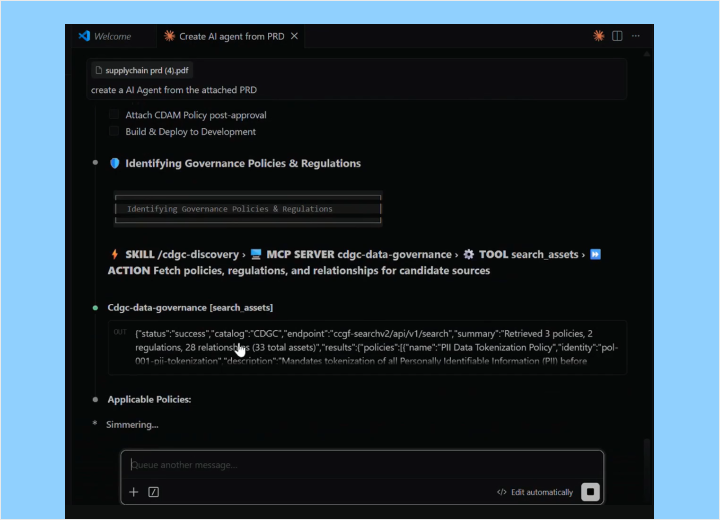
Headless governance across any app or agent
Bring governance capabilities natively inside developer tools, collaboration spaces and agent frameworks with MCPs to plug AI trust gaps between disconnected interfaces.
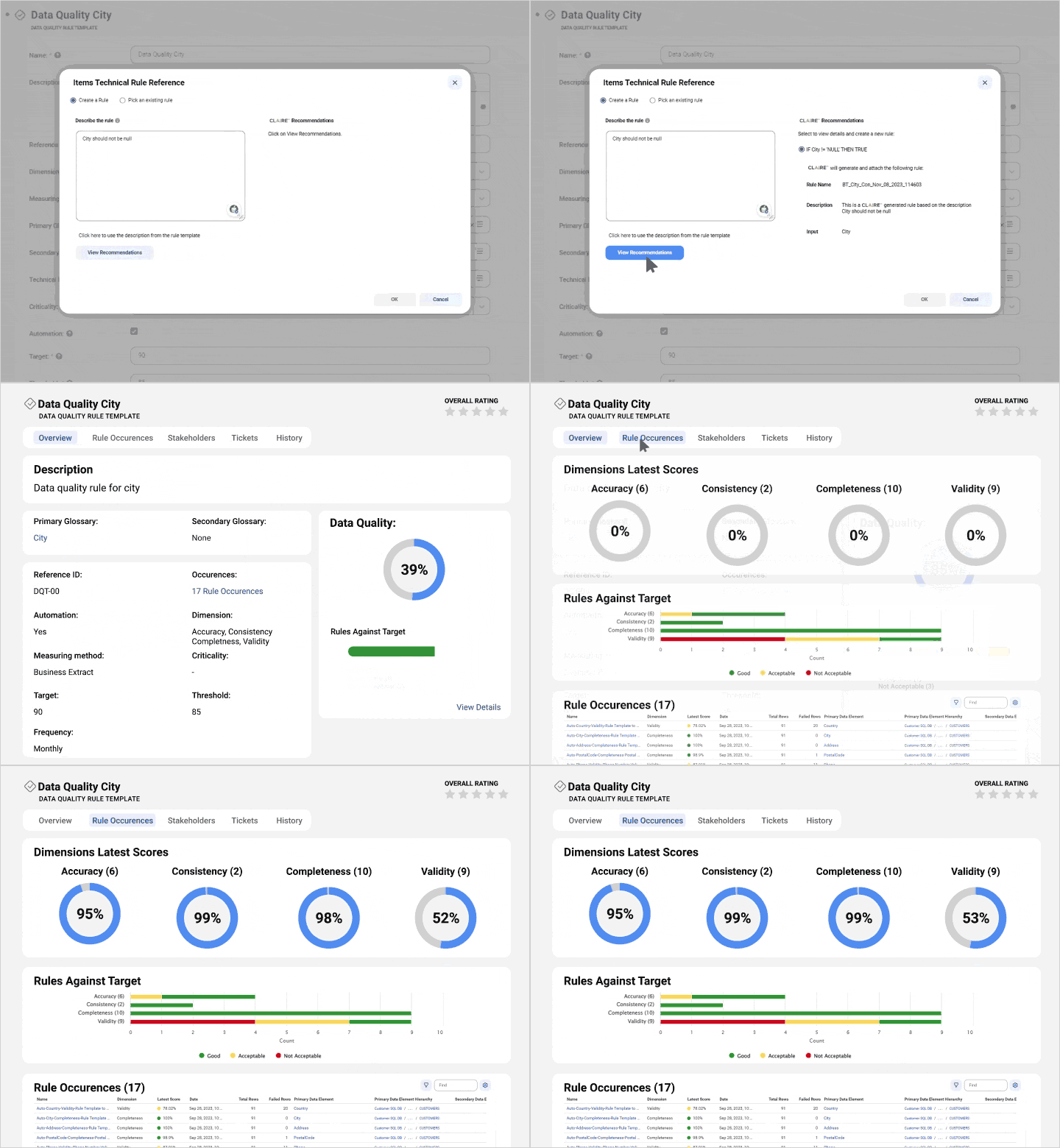
Integrate governed data quality and observability
View profiling statistics and monitor scorecards from a single pane to improve data quality and insights.
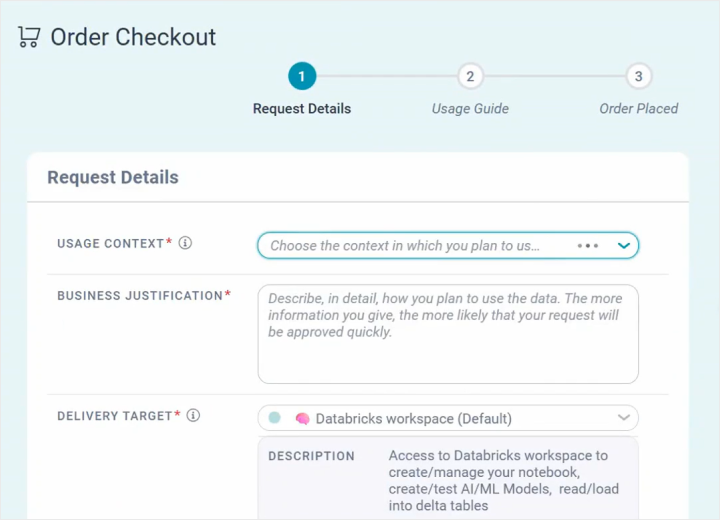
Share AI-ready data products confidently
Make data and AI assets available safely across the organization through a governed marketplace for business users, applying policy-based access for safe use.
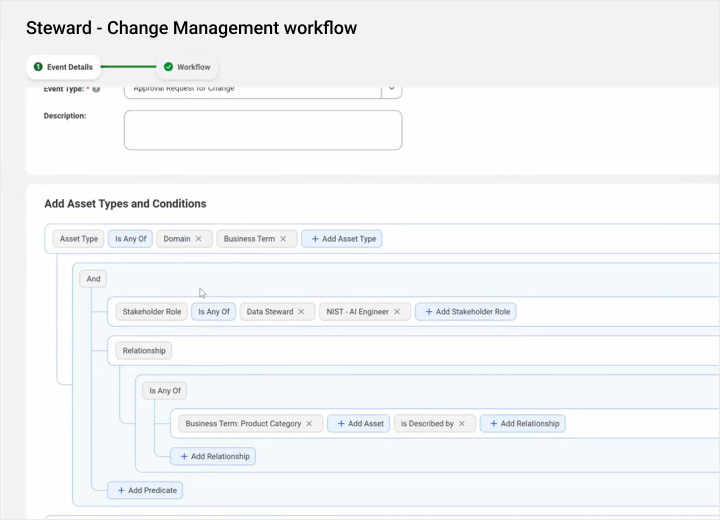
Streamline governance experience and execution
Highly flexible, no-code workflow management and user experience customizations based on user roles, asset attributes, sensitivity levels, domain ownerships, and more.
Pay only for what you use with our flexible pricing.
Explore related Data and AI Governance services
As a leading part of the AI-powered Informatica Intelligent Data Management Cloud (IDMC), Data Governance & Privacy works with a range of complementary services.
Essential Data and AI Governance resources
WEBINAR
From Dashboards to Decisions: Power Analytics & Agentic AI with Trusted Data


Informatica Named Leader in Gartner® Magic Quadrant™ for Data & Analytics Governance Platforms
Cloud Data Governance Adoption Guide: 8 Best Practices for Success

AI Governance for Dummies

5 Top Ways to Quantify the ROI of Trusted Data for Smarter Analytics
FAQ about Data Governance
Data governance is a set of principles, standards and practices to help ensure your data is reliable, consistent and trustworthy. It involves establishing frameworks with policies and procedures that guide the creation, use and maintenance of data safely, securely and responsibly.
AI governance is the system of policies, practices and technical controls used to guide the ethical development, safe deployment and regulatory compliance of artificial intelligence systems throughout their lifecycle. It matters because unmonitored AI introduces severe operational, legal and societal risks that can trigger massive financial penalties and destroy trust. Ultimately, AI governance bridges the gap between rapid technological innovation and risk management, ensuring AI models remain transparent, accountable and reliably aligned with human values and business goals.
Data governance supports privacy and compliance by translating complex legal mandates (such as GDPR, CCPA and HIPAA) into enforceable, automated technical controls across an organization's data ecosystem. It systematically discovers and classifies sensitive personal data (PII), enforces strict access restrictions and automates lifecycle rules like data retention and deletion (fulfilling "right to be forgotten" requests).
Data access governance (DAG) is a security and compliance discipline focused on managing, monitoring and enforcing who can access specific datasets, under what conditions and for what purpose. Operating at a granular level within the data itself, rather than just managing system login credentials, DAG enforces policies like least privilege, Role-Based Access Control (RBAC) and dynamic data masking down to individual rows and columns.
AI transforms data governance from a slow, manual administrative burden into an automated, scalable and proactive discipline by leveraging machine learning and natural language processing across the entire data lifecycle. It automatically discovers and contextually classifies sensitive data (PII) within both structured and unstructured datasets, auto-generates data catalog documentation and dynamically maps end-to-end data lineage. Additionally, AI enhances security by continuously monitoring user access patterns to flag anomalous behavior, dynamically enforcing context-aware access controls and predicting quality issues before bad data reaches downstream applications.