

Redefining Data Integration with Agentic AI in IDMC
Table Of Contents
Table Of Contents
What happens if the systems we have always relied on are not enough anymore, and what should take their place? Here, Shibaji Mitra and Kirti Avinash explain that the answer lies in a major shift —from static pipelines to intelligent, autonomous agents.2,3
Introduction: The inevitable breakdown of traditional data pipelines
For decades, companies have depended on Extract, Transform, Load (ETL) pipelines and Extract, Load, Transform (ELT) pipelines as the backbone of their data integration strategies. These structured approaches once powered business intelligence, but now these methods are less popular, due to a shared reputation for being too rigid and scheduled in their nature.
With the sheer volume, velocity and variety of data today, businesses need insights in real time—something that old-school batch processing just cannot deliver. As a result, traditional pipelines are starting to crack under pressure, causing costly delays and bottlenecks that modern organizations simply cannot tolerate.
Agentic AI: An autonomous workforce
The limitations of static pipelines call for a shift toward a more dynamic and autonomous approach driven by agentic AI, whereby autonomous systems that can sense their environment, reason, make decisions, and perform complex, multi-step tasks to achieve goals with minimal human help. Or, to put it another way – agency.
This is the ability to be proactive and goal-oriented, not reactive,1, and it’s what sets agentic AI apart from generative AI. While generative AI produces content, agentic AI takes action based on its reasoning to complete tasks.
This architecture is a natural evolution of proven design principles. It depends on a technology stack where large language models (LLMs) serve as reasoning engines, knowledge bases provide context and memory systems support learning. This positions agentic AI as the next step in automation, requiring a comprehensive platform to handle this new AI workforce.5
The agentic workflow: A new paradigm for data integration
Agentic AI redefines data integration by moving from rigid pipelines to automated workflows. This new approach shifts from a reactive to a proactive model. Unlike the traditional process of scheduled trigger, an AI agent can constantly monitor its environment and start an integration process when it detects an event, such as a new file arriving or a drop in data quality. This change raises the human role from a hands-on operator to a strategic overseer who sets high-level goals and policies, enabling agents to handle execution. 5,6
A key example is the "self-healing" pipeline. When an agent detects an error it can automatically diagnose the root cause and take corrective action without stopping the entire workflow. This significantly reduces downtime and relieves engineers from firefighting. Agents are also adaptable, capable of detecting schema drift and changing data mappings automatically. They can also perform autonomous optimization, adjusting integration patterns to balance performance and cost based on real-time monitoring.4
Industries across retail, finance and healthcare have significantly benefited from applying Agentic AI in data integration — achieving faster insights, improved data quality, and measurable business outcomes.6
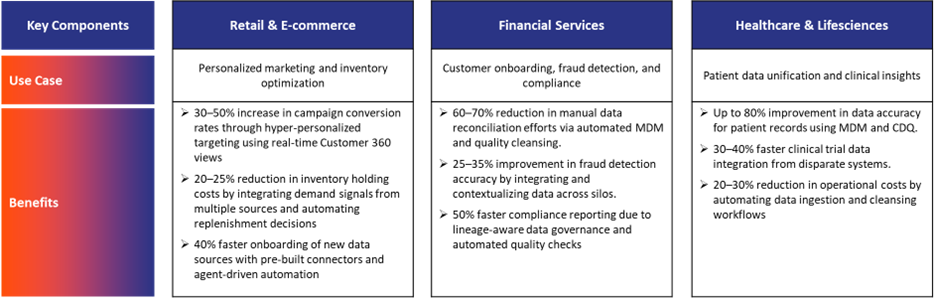
Figure 1: Business benefits across industries
IDMC: The command center
An AI agent cannot operate in isolation. It needs a unified, integrated platform to act as its command center. The Informatica Intelligent Data Management Cloud (IDMC) is designed to be this perfect environment — an optimal operating system for an autonomous AI workforce.
At the core of IDMC is CLAIRE, Informatica's AI engine that processes petabytes of metadata to understand data relationships and patterns. This forms the foundational intelligence that agents can build upon. To accomplish a goal like creating a trusted Customer 360 view, an agent is envisioned to orchestrate a symphony of IDMC services.7
- Step 1: Discovery – The agent's initial task is to understand the data environment. It queries the Cloud Data Governance and Catalog (CDGC) service to identify all data assets across the organization that relate to customers. The CDGC offers a complete map, showing the agent where customer data is stored — in CRMs, marketing platforms, billing systems, and more —alongside its lineage, quality scores, and business context.6
- Step 2: Ingestion and Integration – After identifying the sources, the agent uses Cloud Data Integration (CDI) to perform data movement. By leveraging CDI's extensive library of pre-built connectors and its scalable, serverless processing engine the agent can efficiently extract data from hundreds of on-premises and cloud applications without needing to manage the underlying infrastructure. 7,8
- Step 3: Quality Assessment and Cleansing – As data enters the platform, the agent activates the Cloud Data Quality (CDQ) service to profile the raw data and evaluate its quality. The agent can apply a set of predefined business rules to verify completeness, accuracy, and consistency. If it detects anomalies such as missing address fields, invalid email formats or inconsistent state abbreviations etc. It can utilize CDQ's powerful cleansing, standardization, and enrichment transformations to fix the issues automatically. The CLAIRE engine can even suggest new data quality rules to the agent based on patterns it observes in the data.9
- Step 4: Consolidation and Contextualization – After cleaning data from multiple sources the agent's final step is to create a unified view, using Cloud MDM and 360 Applications to perform this essential task. It can do this by using advanced matching algorithms to identify and merge duplicate customer records, producing a "golden record" that serves as the single source of truth for each customer. This MDM hub becomes the agent's persistent memory and the authoritative foundation for all future actions.10
- Step 5: Action and Learning – With a trusted, real-time Customer 360 view now available, the agent can take appropriate action. It might feed this high-quality data into a generativeAI model to enable highly personalized marketing campaigns, send it to a customer service application to give support staff full context, or update analytics dashboards. The results of these actions (e.g. campaign conversion rates or customer satisfaction scores) form a vital feedback loop which helps the agent to continuously learn and improve its data integration processes for even better outcomes in the future.7

Figure 2: Orchestration of IDMC Services
Governance and Trust: Control, Compliance and Accountability in Agentic AI Automation
Agentic AI-powered autonomous processes in IDMC operate within a well-defined scope of control, compliance. and accountability. Thanks to Cloud Data Governance and Catalog (CGDC) – ensuring responsible automation aligned with enterprise standards.
Here’s how CDGC guarantees governance and oversight while enabling Agentic AI-driven dataintegration:11
- Automated Data Discovery and Classification: CDGC helps agents identify and classify sensitive data (e.g., PII, financial records) using AI-powered scanning and metadata enrichment.
- Policy Enforcement: Data privacy, retention and access policies are automatically applied across all integrated systems, ensuring compliance with regulations like GDPR and HIPAA.11
- Audit Trails and Lineage Tracking: Every action taken by the agent is logged, and full data lineage is maintained, providing transparency and accountability.11
- Human Oversight: Data stewards and architects remain in control, with the ability to review, approve or override agent decisions – resulting in responsible AI usage.11
This balance of automation and control empowers organizations to innovate confidently while maintaining trust and compliance.
Conclusion: The strategic imperative of autonomous data management
The shift from rigid pipelines to intelligent agents is more than just a technological upgrade, it’s a strategic move. It tackles the main issues of rigidity, latency, and scalability that have long limited the value of enterprise data. By adopting agentic AI organizations can turn data integration into a robust, self-improving function. This also raises the role of data professionals, freeing them from reactive firefighting so they can focus on setting goals and governance for their new AI workforce. Achieving this future depends on a purpose-built foundation like Informatica's Intelligent Data Management Cloud. IDMC offers the centralized control needed to empower an autonomous data workforce, helping businesses finally turn their data into their greatest competitive asset.
As Agentic AI continues to evolve, organizations are beginning to envision a future where intelligent agents collaborate not only in data integration but also across governance, security and analytics.This evolution promises a dynamic ecosystem where autonomous processes are guided by human oversight, delivering smarter decisions and deeper insights at scale.
Learn more about Informatica, IDMC and how you can turn data into decisions, here.
1. https://nexla.com/data-integration-techniques/etl-vs-elt
2. https://medium.com/@pillai.aravinds/the-evolution-of-etl-processes-moving-beyond-traditional-data-integration-techniques-59bdd5846c10
3. https://www.reddit.com/r/dataengineering/comments/nju5r3/what_are_some_challenges_you_have_faced/
4. https://www.matillion.com/blog/automation-vs-ai-data-integration
5. https://aws.amazon.com/what-is/agentic-ai/
6. https://medium.com/genusoftechnology/next-generation-data-engineering-powered-by-agentic-ai-transforming-enterprise-data-management-c75af6e75b71
7. https://www.informatica.com/about-us/claire.html
8. https://www.informatica.com/content/dam/informatica-com/en/collateral/data-sheet/informatica-data-cloud-integration_data-sheet_3448en.pdf
9. https://www.informatica.com/content/dam/informatica-com/en/collateral/data-sheet/cloud-data-quality_data-sheet_3688en.pdf
10. https://www.informatica.com/resources/articles/what-is-master-data-management.html
11. https://www.informatica.com/content/dam/informatica-com/en/collateral/white-paper/informatica-intelligent-data-management-cloud-clarie-security-and-privacy-overview_white-paper_4999en.pdf