
Informatica Recognized as a Leader in the 2025 Gartner® Magic Quadrant™ for Data Integration Tools for the 20th Consecutive Time
Table Of Contents
Table Of Contents
Modern analytics and artificial intelligence (AI) are transforming enterprises into insight-driven, adaptive organizations. While analytics uncover insights that inform decision-making, AI extends this capability by revealing hidden patterns, generating predictive insights and enabling proactive, prescriptive actions. Together, analytics and AI move businesses from reacting to the past toward anticipating and shaping the future.
Organizations that effectively harness analytics and AI consistently outperform their peers. “92% of data leaders say that their company got measurable business value from data and analytics investments.”1 And McKinsey reports that, “Over the next three years, 92% of companies plan to increase their AI investments.”2
Data as the Bedrock of Modern Analytics and AI
Modern analytics relies on trusted, high-quality data to identify trends and opportunities. Similarly, AI models learn and evolve by processing massive volumes of data to make predictions and intelligent decisions. Yet managing enterprise data remains one of the most complex challenges in the digital era.
From integrating diverse data sources and formats to maintaining data quality, governance and accessibility, organizations must ensure that data is fit for purpose and ready for use. Success depends on building a robust data value chain — one that can integrate all data types orchestrate workflows, cleanse and protect data and make it discoverable, understandable and ready for analytics and AI consumption.
Tool Sprawl Is a Hidden Barrier to Data Readiness
Many organizations have accumulated multiple point solutions — one for data integration, another for data quality, a separate one for governance and so on. While each tool may serve a purpose, collectively they create redundancy, overlap and integration challenges that slow innovation and increase cost and complexity. To achieve agility and scale, enterprises need a unified, intelligent data management platform that eliminates tool sprawl and simplifies the end-to-end data journey.
Informatica Intelligent Data Management Cloud: Unified Data Management for the Enterprise
Informatica delivers a comprehensive, cloud-native and AI-powered data management platform that unifies all data management capabilities across hybrid and multi-cloud environments. Powered by CLAIRE®, Informatica’s AI-powered metadata engine, the Informatica Intelligent Data Management Cloud (IDMC) offers out-of-the-box connectivity, multiple deployment options (including serverless) and unmatched scalability and trust.
We’re proud to share that for a record 20th consecutive time, Gartner has recognized Informatica as a Leader in the 2025 Gartner® Magic Quadrant™ for Data Integration Tools.3 Gartner evaluates vendors based on their Completeness of Vision and Ability to Execute, assessing innovation, market understanding, operational excellence, among other criteria. Informatica is positioned furthest on the “Completeness of Vision” axis for 12 years straight, according to the report.
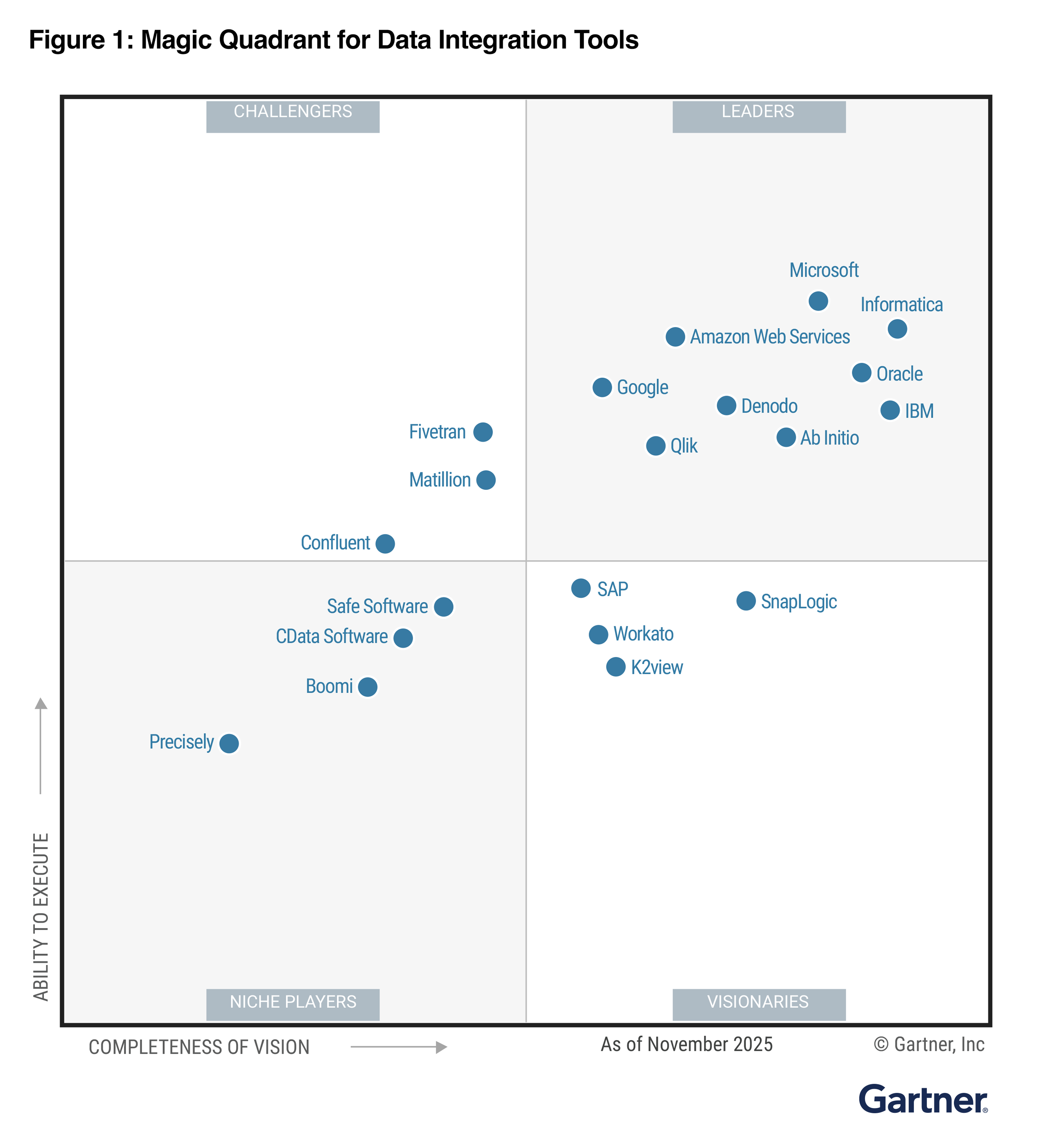
Figure 1. 2025 Gartner® Magic Quadrant™ for Data Integration Tools
How Informatica Solves Data Challenges for Modern Analytics and AI
Informatica’s approach to data integration is built on a five-factor value framework that empowers enterprises to accelerate their analytics and AI initiatives:
- High productivity development: Simplify the creation of AI-ready data pipelines for all patterns — ETL, ELT and reverse ETL — with pre-built templates, connectors and wizards.
- Flexible and cost-optimized: Choose from serverless, elastic or pushdown deployment options and leverage the CLAIRE-powered runtime engine for maximum efficiency.
- Data and platform portability: Integrate any data, any pattern, at any latency. Support all modern architectures — data mesh, data fabric and lakehouse —across multi-cloud and on-premises environments.
- Future-proof investment: Design pipelines once, deploy anywhere and extend seamlessly across governance, MDM, GenAI and agentic AI use cases.
- Enterprise-grade scalability: Operationalize thousands of pipelines with CI/CD, DataOps and FinOps support — processing trillions of cloud transactions every month and growing exponentially.
Next Steps
Read the full report. Download your complimentary copy of the 2025 Gartner® Magic Quadrant™ for Data Integration Tools now.
1https://www.g2.com/articles/big-data-statistics
2https://www.mckinsey.com/capabilities/tech-and-ai/our-insights/superagency-in-the-workplace-empowering-people-to-unlock-ais-full-potential-at-work
3Gartner Magic Quadrant for Data Integration Tools, Michele Launi, Nina Showell, Robert Thanaraj, Sharat Menon, 8 December 2025
Gartner and Magic Quadrant are trademarks of Gartner, Inc. and/or its affiliates.
Gartner does not endorse any company, vendor, product or service depicted in its publications, and does not advise technology users to select only those vendors with the highest ratings or other designation. Gartner publications consist of the opinions of Gartner’s business and technology insights organization and should not be construed as statements of fact. Gartner disclaims all warranties, expressed or implied, with respect to this publication, including any warranties of merchantability or fitness for a particular purpose.
This graphic was published by Gartner, Inc. as part of a larger research document and should be evaluated in the context of the entire document. The Gartner document is available upon request from Informatica.