
Rethinking Sustainability Data in an AI-Driven Enterprise
Table Of Contents
Table Of Contents
Sustainability data is rapidly becoming a core input into enterprise decision-making. From investment strategies and risk management to regulatory reporting and corporate governance, organizations are relying on Environmental, Social and Governance (ESG) and sustainability insights more than ever before.
At the same time, many enterprises are discovering a frustrating reality: sustainability data is abundant, but trust and clarity remain hard to achieve. Different data sources, methodologies and interpretations often lead to inconsistent outcomes, making it difficult to act with confidence.
To move forward, organizations need to rethink not only sustainability metrics but also the data systems that produce them.
How Sustainability Data is Reshaping Enterprise Decision-Making
Enterprises today manage sustainability data across a growing number of internal and external sources. Corporate disclosures, third-party datasets, regulatory inputs and qualitative reports all contribute to how sustainability performance is assessed.
This growing reliance on sustainability data has raised expectations. Stakeholders increasingly want insights that are transparent, explainable and auditable — not just headline scores. As sustainability considerations move from reporting exercises to strategic decision-making, the underlying data foundation becomes critical.
Why Sustainability Data Remains Difficult to Trust at Scale
Despite increased data availability, sustainability insights often remain difficult to trust consistently. The challenge is rarely a lack of intent. Instead, it stems from the complexity of the data pipelines that transform raw inputs into decision-ready signals.
Many sustainability data workflows were built as static pipelines — designed for specific datasets, fixed assumptions and limited change. As new data sources emerge, regulations evolve and analytical techniques advance, these rigid systems struggle to keep pace.
When pipelines cannot adapt easily, transparency suffers. Lineage becomes harder to trace, data governance becomes harder to enforce and confidence in outcomes declines. A recent joint research initiative by researchers from Informatica, Uniphore and NVIDIA, ETHIS introduced the Trustworthy Equation as a formal framework for assessing and validating data quality. It transforms trust, from a subjective perception, into a measurable, operational and scalable system that guides how AI, data and organizations are designed, evaluated and governed.1
Enterprises Need More Adaptable Data Foundations
Modern sustainability initiatives require data foundations that can evolve without sacrificing control. Enterprises need systems that support change while remaining governed, observable and auditable.
This means moving beyond one-off integrations and brittle workflows toward cloud-native, intelligent data architectures designed to handle continuous change while maintaining trust and compliance.
Adaptability is no longer a “nice to have.” It is a prerequisite for scaling sustainability analytics across the enterprise. The ESG reference architecture also needs to provide a governed, end-to-end data infrastructure that enables organizations to collect, integrate, standardize and operationalize sustainability data across internal systems, supply chains and external ESG ecosystems.
By combining centralized data hubs, master data management and strong governance capabilities such as data lineage, quality validation and metadata management, it establishes a trusted foundation for regulatory reporting, emissions tracking, benchmarking and strategic decision-making. This architecture transforms ESG from fragmented, manual reporting into a scalable, real-time intelligence layer, enabling organizations to improve transparency, automate compliance and leverage AI to drive more informed, efficient and accountable sustainability outcomes.2
Moving From Static Pipelines to Intelligent, Agentic Workflows
To address these challenges, many organizations are shifting from monolithic pipelines to agentic data workflows.
In an agentic approach, complex data processes are broken down into smaller, specialized steps. Each step focuses on a specific responsibility — such as ingestion, validation, enrichment, or scoring — and operates within clearly defined rules and policies.
This modular design improves flexibility and control. Individual components can evolve independently, errors are easier to isolate and governance can be applied consistently across the workflow.
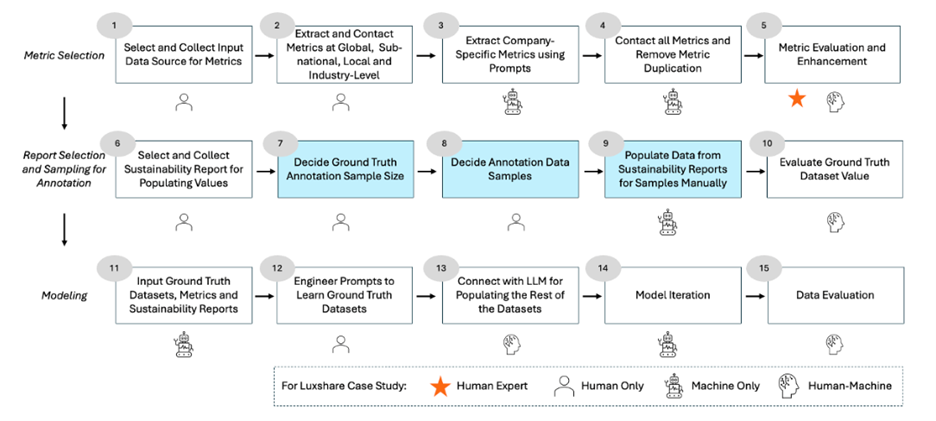
Figure 1: Illustrative agentic sustainability data pipeline
(Showing modular stages such as data ingestion, validation, enrichment, governance and analytics instead of a single linear pipeline.)
Redefining Human Oversight in AI-driven Data Systems
As AI becomes more embedded in enterprise data workflows, the role of human oversight is changing, not disappearing.
Rather than managing every operational step, humans increasingly focus on defining policies, setting guardrails and overseeing outcomes. AI systems handle execution at scale, while humans provide context, judgment and accountability.
This model of human–AI collaboration is especially important for sustainability data, where interpretations can be nuanced and consequences — regulatory, financial, or reputational — are significant.
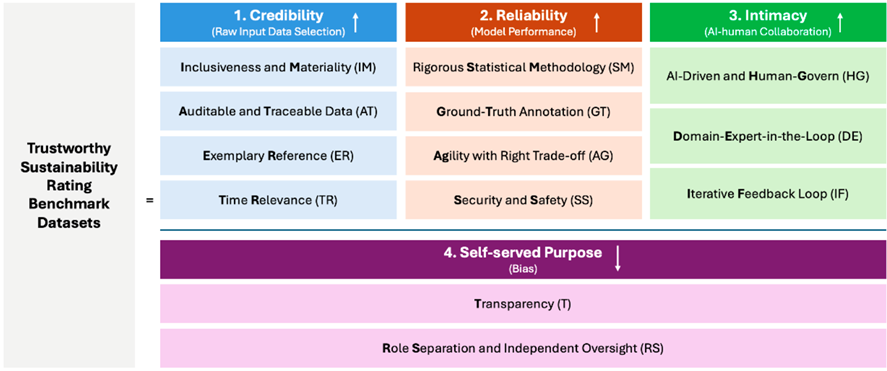
Figure 2: Human–AI oversight loop
(Showing humans setting policies and constraints, AI executing workflows and feedback loops for monitoring and governance.)
Operationalizing Sustainability Analytics in the Enterprise Cloud
Translating these architectural ideas into production environments requires a strong, unified data foundation.
Platforms like Informatica Intelligent Data Management Cloud™ (IDMC) enable enterprises to operationalize adaptable sustainability data pipelines by bringing together orchestration, metadata intelligence, governance, lineage and observability in a cloud-native environment.
By centralizing control while supporting distributed, AI-driven workflows, IDMC helps organizations scale sustainability analytics without compromising transparency or compliance.
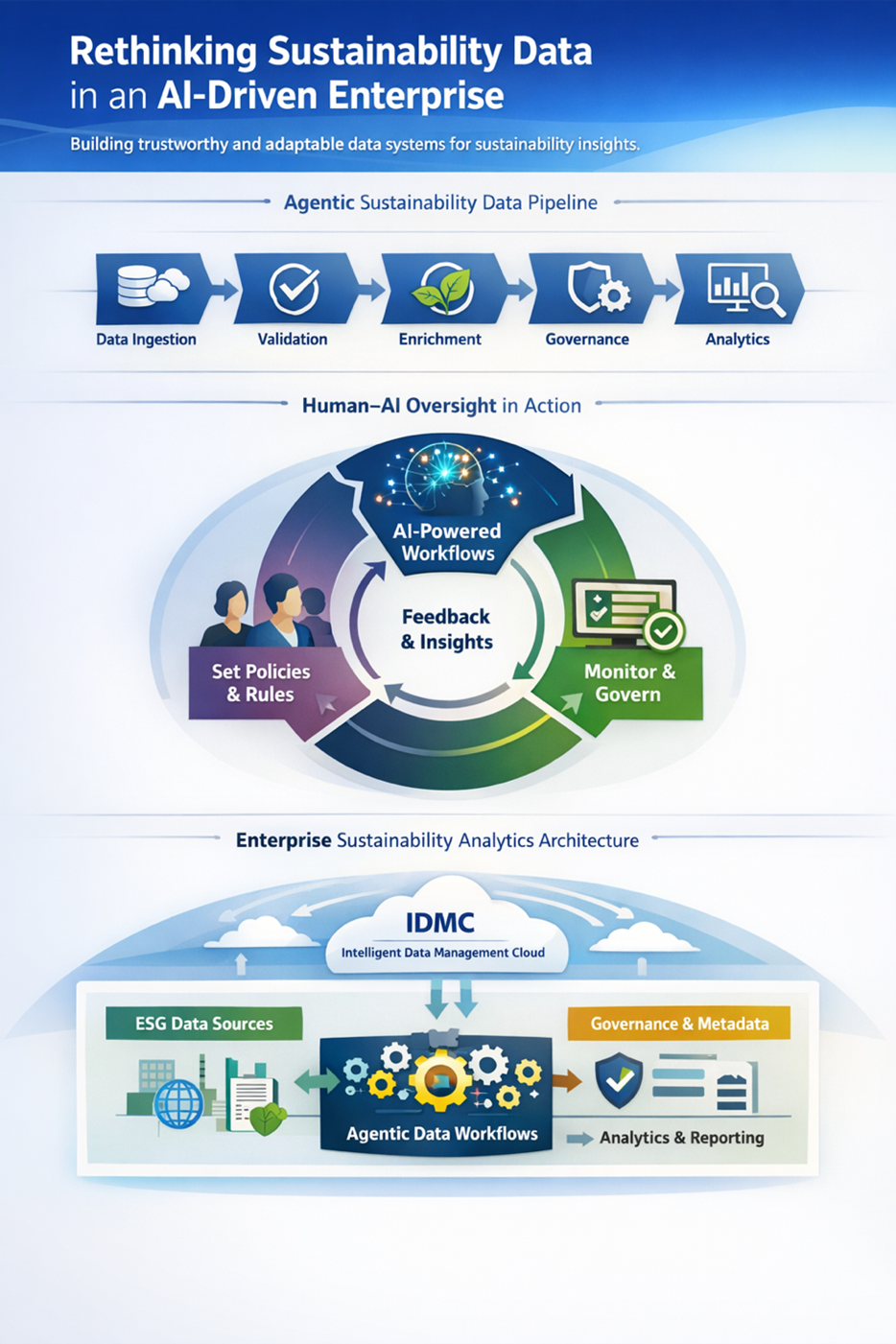
Figure 3: An overview of how to build data systems for sustainability insights.
Building Trust Through Modular, Governed Data Design
One of the key advantages of modular, agentic workflows is the trust they offer. Smaller, well-defined components are easier to explain, monitor and improve over time.
When sustainability insights can be traced back through governed, auditable steps, stakeholders gain confidence in both the numbers and in the system producing them. This clarity allows enterprises to move faster while maintaining accountability.
What This Means for the Future of Sustainability Data
As sustainability data continues to influence high-stakes enterprise decisions, organizations will need systems designed for long-term adaptability and trust.
Agentic workflows, supported by intelligent data management platforms, provide a practical path forward, enabling enterprises to embrace AI-driven analytics while retaining governance, transparency and human oversight. In the end, trustworthy sustainability insights are not defined by a single score. They are built on data foundations that evolve responsibly as the enterprise — and the world around it — changes.
Learn more about how you can meet ESG standards with AI-powered data governance here.
References:
1. A Universal Human-AI Collaboration Framework to generate benchmark datasets for evaluating sustainability rating methodologies. Trust equation. GEMI-AI. Retrieved February 14, 2026, from https://ethisfoundation.gemi-ai.tech/trust-equation
2. Informatica. (n.d.). Environmental, social and governance (ESG) reference architecture. Informatica. https://www.informatica.com/content/dam/informatica-com/en/collateral/reference-architecture/esg-reference-architecture_4659.pdf